Line Pump Or Boom Pump Hire?
A line pump suits most house slabs, driveways, footings and tight backyards, because the concrete travels through hose laid along the ground. A boom pump suits pours that are up high, behind a house or spread across a big site, because a folding arm places the concrete from above. Your site access, the height of the pour and its size decide which one you need.

- Ground-level pour with walkable access: a line pump
- Pour over a house, fence or pool: a boom pump
- Upper-storey slab or raised deck: a boom pump
- Narrow side passage or courtyard: a small line pump
- Large commercial or civil pour with several pour points: a boom pump
What Is a Concrete Line Pump?
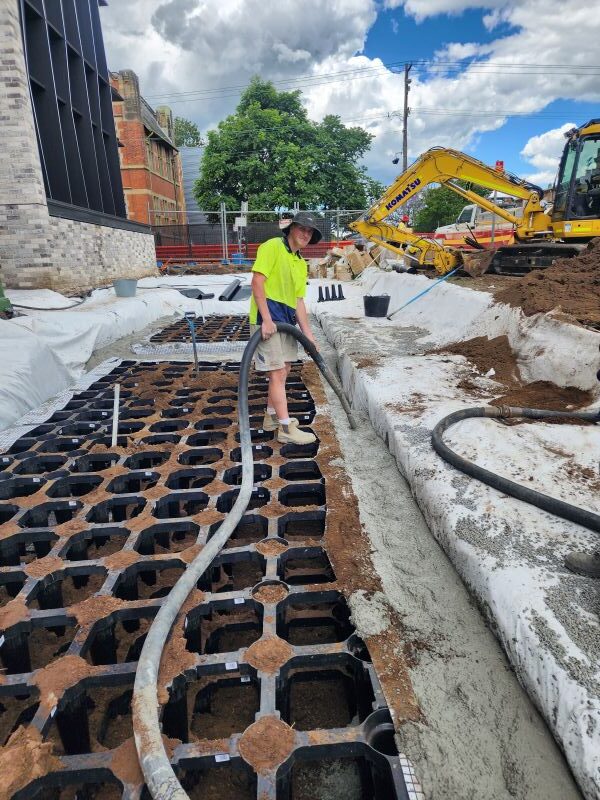
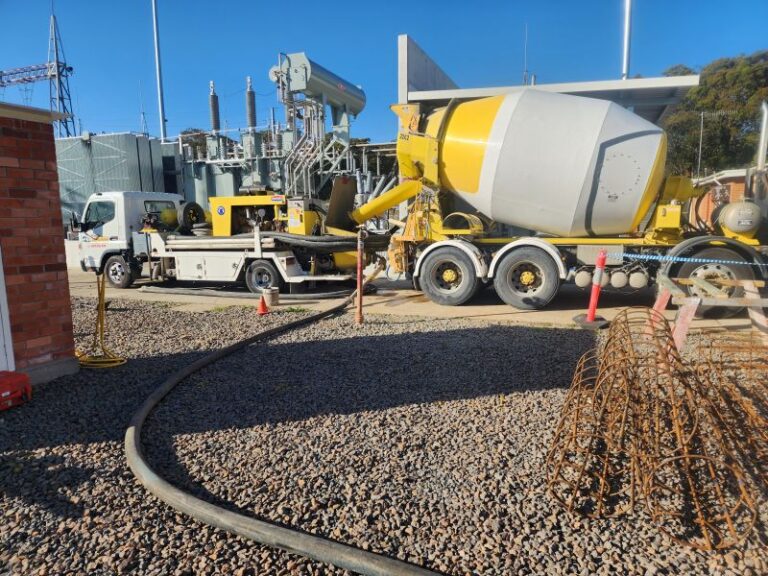
A concrete line pump pushes concrete from the truck to the pour through steel and rubber hoses laid along the ground. The concrete truck discharges into the pump, and the pump moves the mix down the line to the exact spot where your concreters are working. It is the workhorse of residential concrete pumping.
Because the line is made up of hose sections, our operator can run it around corners, through a garage, down the side of a house or over a fence. That flexibility is why a line pump hire booking covers the bulk of house and backyard pours we see around Maitland, Newcastle and Lake Macquarie.
Pours a Concrete Line Pump Handles Well
- House slabs and foundations
- Driveways and paths
- Garage and shed floors
- Pool surrounds and landscaping
- Footings and strip foundations
- Granny flat slabs
If the concrete truck can park a reasonable distance from the pour, a line pump is usually all you need. We carry enough hose to reach most standard residential setups without moving the truck part way through the pour.
How a Line Pump Works on a Tight Site
A line pump truck can often park on the street or in the driveway, so it doesn’t need the wide, clear set-up area a boom truck needs. Our crew runs the hose through side paths, under scaffolding and around buildings, and we lay protection mats where the line crosses finished surfaces. On battle-axe blocks, townhouse sites and back-of-house extensions, that is usually the difference between pumping the concrete and barrowing it.
What Is a Boom Pump and When Do You Need One?
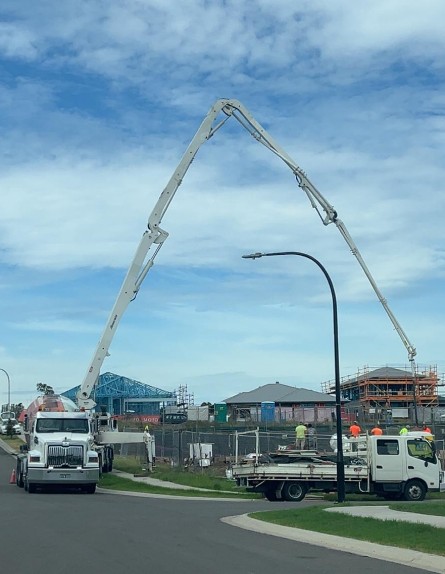
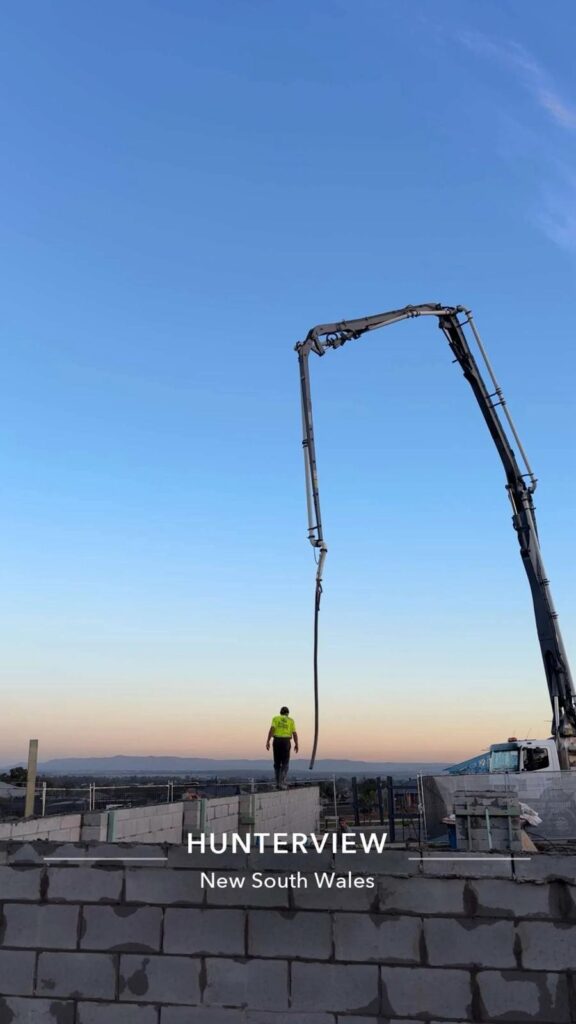
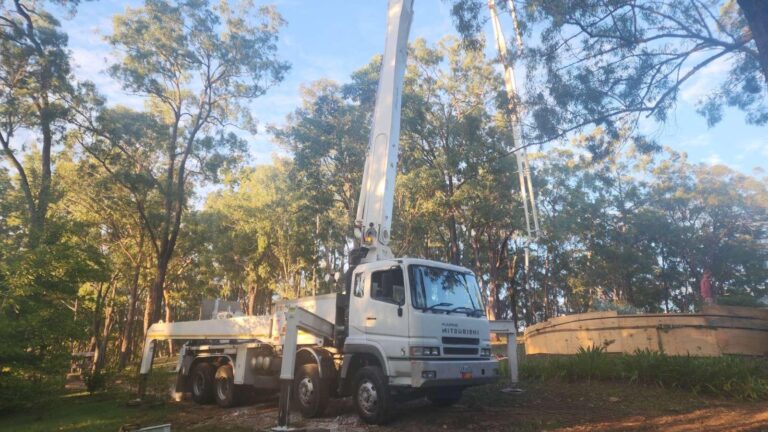
A boom pump is a concrete pump mounted on a truck with a folding hydraulic arm, called the boom. The arm unfolds over fences, across excavations and above existing buildings, and the operator steers the end hose by remote to place the concrete where your concreter directs it. You need a boom when a line can’t be run to the pour.
Around the Hunter Valley and Newcastle, boom pumps get the call when height or volume comes into the pour, such as bridge decks, multi-level builds and industrial pads. A boom makes sense when:
- The pour is above ground level, such as a second-storey slab, an elevated slab or a retaining wall
- The concrete has to go over or around an existing house, fence or pool
- The site has several pour points that need continuous placement
- Ground access is blocked but the pour is open from above
- The pour volume is large, such as a commercial slab, a warehouse floor or civil infrastructure
What a Boom Pump Needs on Site
A boom truck has to set up on a stable, flat surface with enough room to unfold the arm safely. The reach you get on the day depends on where the truck can park and what the boom has to clear. Reach is split into height and distance across, and the two trade off against each other, so a boom at full stretch sideways won’t also be at full height. For a closer look at boom work, read our guide on when a boom pump is required.
Line Pump vs Boom Pump: The Main Differences
The table below compares line pumps and boom pumps on the points that usually decide a booking.
| Line pump | Boom pump | |
|---|---|---|
| How the concrete gets there | Through hose laid along the ground | Through a folding arm that places it from above |
| Best suited to | Ground-level and low-rise pours | Pours at height, over obstacles or across large sites |
| Typical pours | House slabs, driveways, footings, shed floors, pool surrounds | Upper-storey slabs, commercial slabs, civil works, multi-level builds |
| Where the truck parks | Often on the street or in the driveway | On a stable, flat area with room to unfold the boom |
| Cost | Usually the more cost-effective choice on a standard residential pour | Worth booking when the reach or volume of the pour needs it |
How to Choose Between a Line Pump and a Boom Pump for Your Pour
Start with the path from the truck to the pour. If our operator can walk hose along the ground from where the truck parks to the formwork, a line pump will usually do the pour. If the concrete has to go up to a suspended slab or over a house, a pool or landscaping that can’t be crossed, you need a boom.
Next, think about the size of the pour and how it is laid out. A single house slab or driveway suits a line pump. A large slab with several pour points, or a commercial pour that has to be placed continuously, is where a boom earns its hire, because the arm moves between pour points without the crew dragging hose across fresh concrete.
Finally, look at where a truck can set up. A boom needs a firm, level area and room overhead to unfold. If the only parking spot is a narrow street with overhead power lines or low trees, a line pump run through the side of the property is often the better choice. For a step-by-step guide to reach and size, see what size concrete pump do I need.
Where a Small Concrete Pump Fits In
A small concrete pump, also called a mini pump, is a line pump in a compact machine for very tight access. If a person can walk through the gap, the hose can usually get there. Narrow side passages, courtyards, rear-of-property slabs and sites where a full-size truck won’t fit are where a small pump is the right fit. Our guide to concrete pumping in tight spaces covers how we plan these pours.
What to Have Ready When You Book Concrete Pump Hire
You don’t need to know which pump you want before you call. Our team works it out from a few details about your site, and a handful of photos of the access helps even more. When you ring or fill in the quote form, have these ready:
- The suburb and address of the site
- Your preferred date and start time
- Roughly how many cubic metres of concrete will be pumped
- Whether your concrete delivery is already booked
- Whether you have concreters on site for the pour
- Anything in the way, such as a house, fence, pool, power lines or a steep driveway
We run early starts to suit your pour, and every pump we hire out comes with an experienced operator, so you don’t need your own pump operator.
Line Pump and Boom Pump Hire Questions
What is the difference between a concrete pump and a boom pump?
A boom pump is one type of concrete pump. The other common type is the line pump. A line pump moves concrete through hose laid along the ground, while a boom pump uses a truck-mounted folding arm to place concrete from above. Most residential pours use a line pump, and pours at height or over obstacles use a boom.
What is a boom pump used for?
A boom pump is used when concrete has to reach a pour that a ground-level hose can’t get to. That includes upper-storey and suspended slabs, retaining walls, pours behind a house or pool, commercial slabs with several pour points and civil works such as bridge decks. The operator places the concrete by remote from the end of the arm.
How far can a line pump reach?
The reach of a line pump depends on the length of hose we run and the path it takes from the truck to your pour. We carry enough hose to reach most standard residential setups without moving the truck. If your pour is a long way from the street, send us photos of the access and we’ll confirm the set-up before your pour day.
Can a line pump run through a house or under scaffolding?
Yes. With planning, our crew can run line pump hose through carports, down hallways and under scaffolding. We lay protection mats where they are needed so floors, paths and gardens stay clean.
Line Pump and Boom Pump Hire Across Newcastle and the Hunter
Hunter Concrete Pump Hire is based in Rutherford and runs line pumps, boom pumps and small pumps across Newcastle, Maitland, Cessnock, Singleton, Lake Macquarie and Port Stephens. Pricing depends on the pump, the pour and the site, so every booking starts with a quote.
Not sure whether your pour needs a line pump or a boom? Call us on 0419 252 930 or send an enquiry with your site details, and we’ll recommend the pump that suits your pour and explain why.
Our Services
Get A Free Quote
Contact us today for a free, no-obligation quote on your concrete pumping needs.