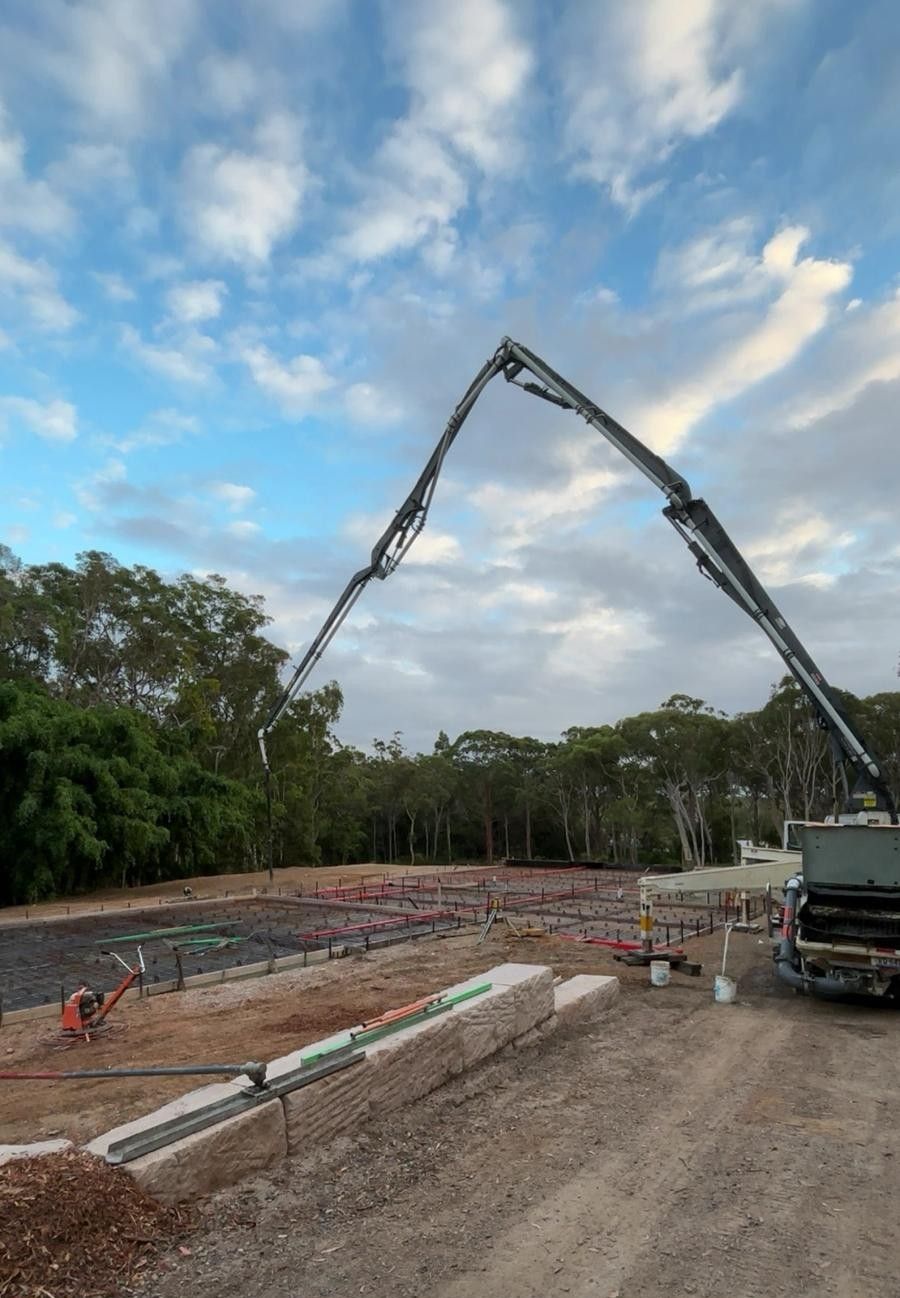
The right size comes down to two things: how far the concrete has to travel and what’s in the way. For most residential pours in Newcastle, Maitland and the Hunter, a line pump or a small pump handles it. When the pour point is over a house, fence or pool, or the truck can’t get close, you want a boom pump with the reach to clear the obstacle.
Here’s how to work out which one suits your site.
What’s the difference between a line pump and a boom pump?
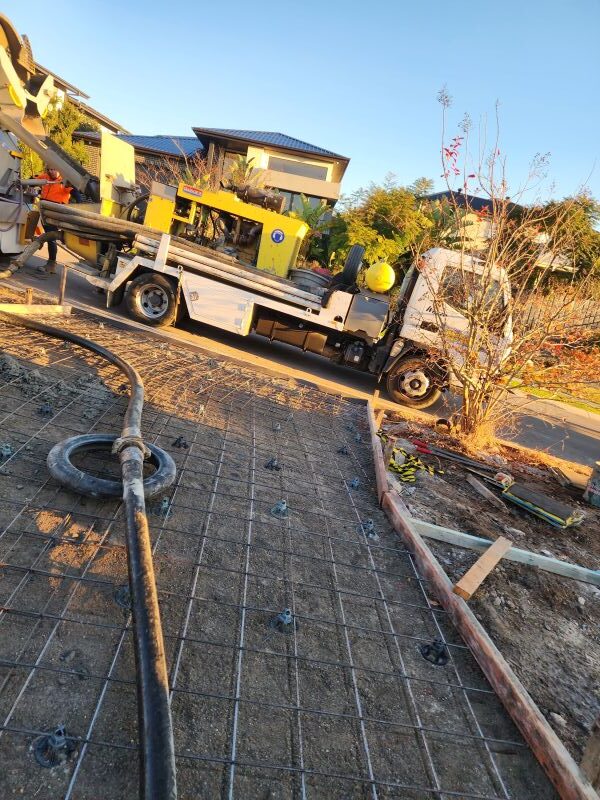
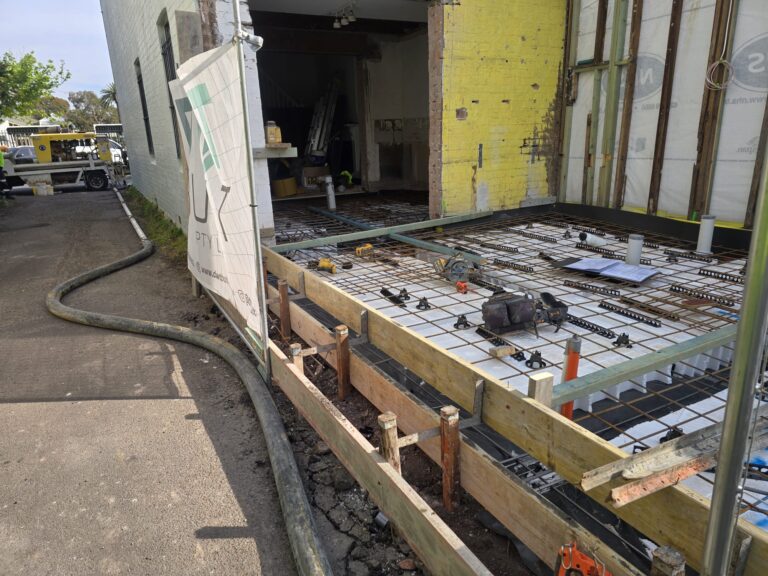
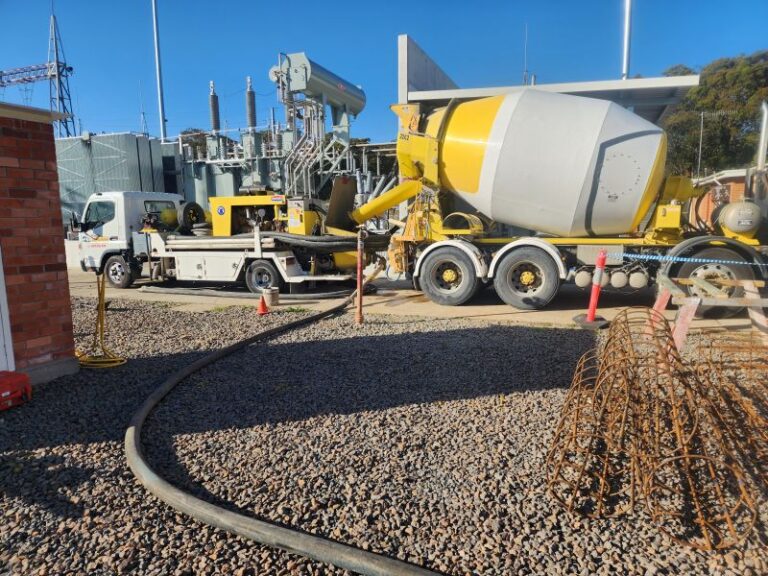
A line pump pushes concrete through steel and rubber hoses laid along the ground from the truck to the pour. You can run the line around corners, through a garage, down the side of a house, even up over a fence by hand. It’s the workhorse for driveways, paths, shed slabs and most residential work where there’s reasonable access.
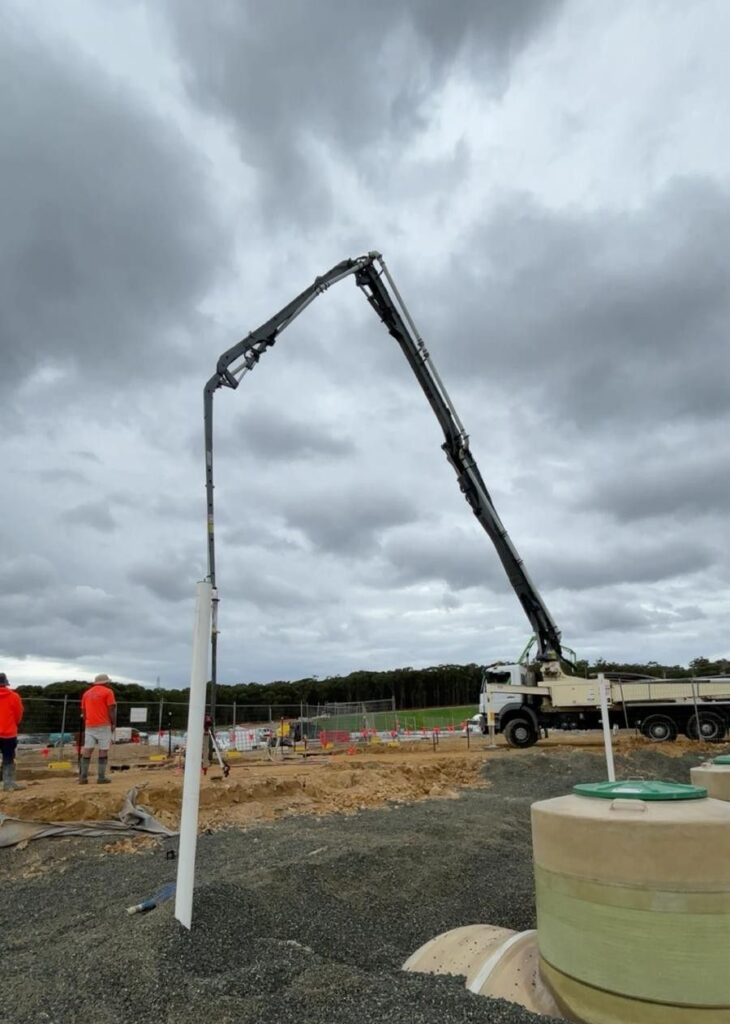
A boom pump uses a folding arm (the boom) mounted on the truck to place concrete from above. The operator drives the end hose to the exact spot with a remote. You hire a boom when you can’t run a line, whether the pour is up high, over an obstacle, or a long way from where the truck can park.
See our line pump hire and boom pump hire pages for what each one’s built for.
When is a line pump or small pump the right size?
A line pump suits the bulk of residential jobs. If the truck can park within reasonable distance and we can run hose along the ground to the pour, a line pump does it without the cost of a boom.
A small pump, also called a mini pump, is the same idea in a compact machine for tight access. If a person can walk through the gap, the hose can usually get there. Think narrow side passages, courtyards, rear-of-property slabs and jobs where a full-size truck won’t fit. Our small concrete pump hire page covers the tight-access work it’s made for.
Pick a line or small pump when:
- The truck can get reasonably close to the site
- You can run hose along the ground or around the building
- The pour is at or near ground level (slab, driveway, path, footings, shed)
- Access is narrow but walkable (small pump)
When do you need a boom pump, and how much reach?
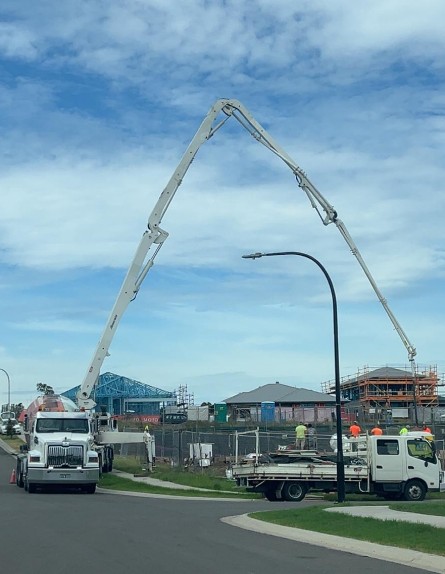
You need a boom when the line can’t get there, whether that’s height, distance or an obstacle in the way. The boom reaches up and over, so the truck stays on the street or driveway while the concrete lands where you need it.
Boom pumps come in size classes by reach. As a general guide across the industry, common sizes run from around 20 metres up through 28, 32 and 36 metres and larger. Bigger numbers mean more vertical and horizontal reach, but a bigger truck that needs more room to set up and unfold the boom. More reach isn’t automatically better; the right size is the smallest boom that clears your obstacle from where the truck can safely park.
Boom reach is split into vertical (how high it goes) and horizontal (how far across it reaches), and the two trade off against each other, so a boom at full horizontal stretch won’t also be at full height. The reach you actually get on the day depends on where the truck sets up and what it has to clear, so it’s worth talking through your site before you book. Confirm the reach of the specific pump for your job rather than going off the headline number.
Choose a boom pump when:
- The pour is up high (suspended slab, second storey, raised deck)
- The concrete has to clear a house, fence, pool or landscaping
- The truck can’t get close enough to run a line
- It’s a large pour where placing from above is faster
If you’re not sure which size clears your site, tell us where the truck can park and where the concrete needs to go, and that’s usually enough for us to call it.
Does the job size change the pump you need?
Volume matters as much as access. A small footing pour and a large commercial slab can both be reached by the same machine, but the bigger the pour, the more it pays to use a pump that keeps a steady flow so the concrete goes off evenly and your crew isn’t waiting.
For a typical residential driveway, shed slab or set of footings, a line or small pump keeps up fine. For high-volume pours like big house slabs, commercial floors and civil work, a boom pump or a higher-output line pump moves the concrete faster and helps your concreters finish before it starts to set. If you’ve estimated your volume already, give us the cubic metres and the access details and we’ll match the pump to both.
FAQ
What size concrete pump do I need for a residential driveway?
For most residential driveways in Newcastle, Maitland and the Hunter, a line pump or a small pump is the right size. A driveway is a ground-level pour, so the concrete only needs to travel along the ground from the truck to the slab, which is exactly what a line pump is built for. If the truck can park on the street or in the driveway and we can run hose to the pour, you don’t need the reach or the cost of a boom pump. Where access is tight, say a narrow side passage or a courtyard a full truck can’t reach, a small pump handles the same job in a more compact machine. The deciding factor is access, not the word “driveway.” Tell us where the truck can park and where the concrete needs to land, and we’ll confirm the right size before you book.
How far can a concrete boom pump reach?
Boom pumps are sold in size classes by reach, commonly from around 20 metres up through 28, 32, 36 metres and larger. Reach is split into vertical (how high) and horizontal (how far across), and the two trade off, so a boom stretched out horizontally won’t also be at its full height. The reach you actually get depends on where the truck can park and what it has to clear, so the headline metre figure is a guide, not a guarantee for your site. The right size is the smallest boom that clears your obstacle from a safe set-up position, because more reach means a bigger truck that needs more room. Always confirm the reach of the specific pump against your site rather than the size-class number. Send us your access details and we’ll tell you what suits.
What’s the difference between a line pump and a boom pump?
A line pump feeds concrete through hoses laid along the ground from the truck to the pour, so you can run it around corners, down the side of a house or over a fence by hand. It’s the everyday choice for driveways, paths, footings and shed slabs with reasonable access. A boom pump places concrete from above using a folding arm on the truck, controlled by remote. You hire it when you can’t run a line, because the pour is up high, a long way off, or behind an obstacle. In short: line pump for ground-level pours with workable access, boom pump for height, distance or anything in the way. Many jobs can go either way, so if you’re unsure, describe the site and we’ll point you to the right one.
Can a small concrete pump reach tight access areas?
Yes. A small pump (also called a mini pump) is built for tight access. The rule of thumb is that if a person can walk through the gap, the hose can usually reach. That makes it the right size for narrow side passages, courtyards, rear-of-property slabs and any job a full-size truck won’t fit. It runs a smaller hose system than a boom pump, so it’s easier to move around a confined site, and it still handles the common residential pours: footings, paths, small slabs and shed bases. The trade-off is output. A small pump moves concrete at a steadier, lower rate than a big boom, which is fine for residential volumes but slower on large pours. If your site is hard to get to, the small pump is usually the answer. Our small pump hire page covers what it’s made for.
Do I need a bigger pump for a large concrete pour?
Not necessarily a bigger machine, but you do want one that holds a steady flow. For high-volume pours like large house slabs, commercial floors and civil work, a boom pump or a higher-output line pump moves concrete faster, which matters because it helps your concreters place and finish before it starts to go off. A small or standard line pump keeps up fine on residential volumes like driveways, footings and shed slabs. The right call comes down to your cubic metres and your access together, not volume alone. If you’ve already estimated the concrete you need, give us that figure plus where the truck can park and where the pour is, and we’ll match the pump to both so the day runs without your crew waiting on concrete.
Get a quote for your pour
The quickest way to get the right size is to tell us two things: where the truck can park, and where the concrete needs to go. From there we’ll match the pump to your site and your volume, whether that’s line, small or boom.
We hire across Newcastle, Maitland and the wider Hunter on a booked, planned basis.
Call us on 0419 252 930 for a straight answer on the right pump for your job.
Our Services
Get A Free Quote
Contact us today for a free, no-obligation quote on your concrete pumping needs.